InsightsPositioning
A Full Calendar Without a Marketing Department
The System for a One-Chair Practice
6 minute read About 950 words, no jargon
What is inside
- The first-visit offer
- Local campaigns
- The automated first reply
- The second visit
What you will take away
- In a specialist practice the person is the brand. Content and ads that hide the practitioner behind stock photos sell nothing.
- The first visit is the product. Give it a name, a length, a price and a clear outcome, and most of the selling is done before the enquiry.
- The second visit decides whether the practice grows. Reminders and follow-up are revenue, not admin, and they can run while you are with a patient.
If you are thinking
A good practitioner, and empty Tuesdays.
Picture a nutritionist with a waiting list on Thursdays and nothing on Tuesdays. Or a physiotherapist who is excellent, charges fairly, and gets most new patients from a sign in the window. Neither has a marketing problem in the way an agency would describe it. They have a calendar with holes in it and no time to fill them, because the person who would do the marketing is the same person who is with the patient.
Nutrition is one of the branches of the clinic group whose marketing we run, and the one-location businesses we work with get the same system as the group, sized to one calendar. A beauty salon in Kranj, one location and one owner, got 245 enquiries at €3.15 on average from two campaigns, every one of them forwarded with the contact details and the answers. The method that made that work is the same for a one-chair practice. It is small, and it is disciplined.
The person is the brand
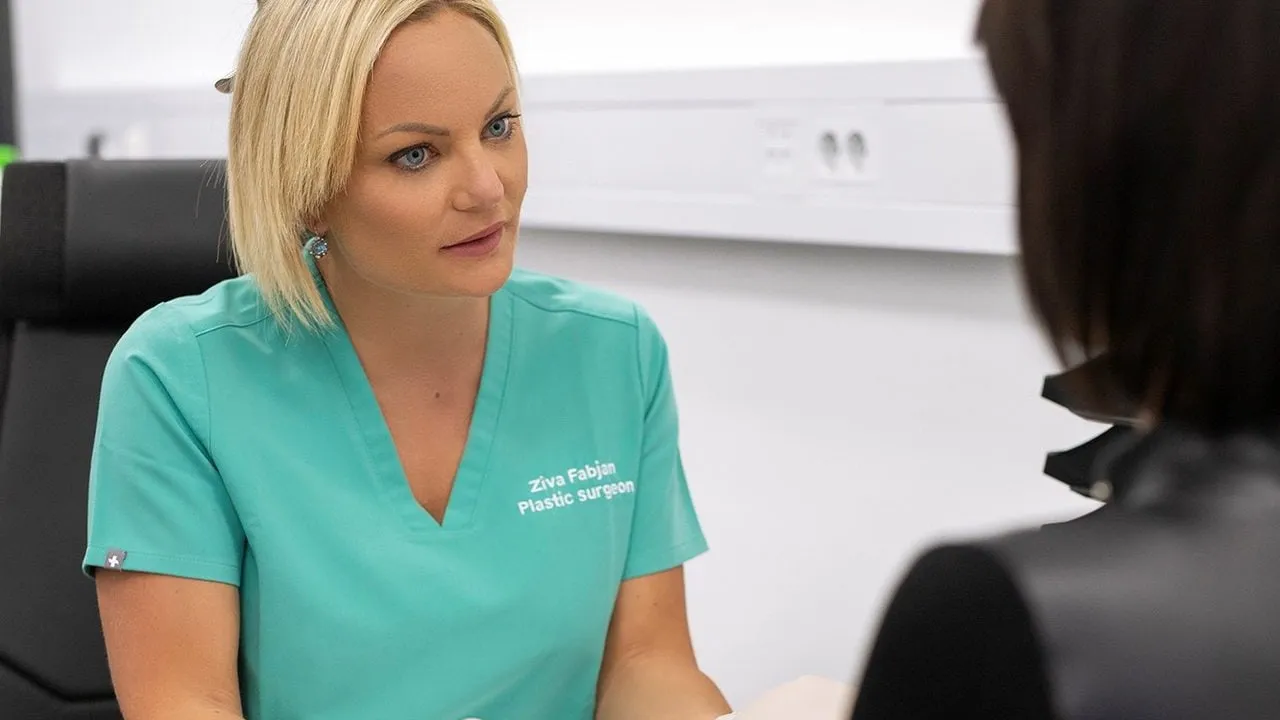
The first thing a specialist practice has to accept is that the practitioner cannot be hidden. The patient is not choosing a clinic. They are choosing a person to tell about their knee, their eating, their back, their anxiety. The face, the voice and the way of explaining things do most of the selling, long before the first visit.
This is why stock photography is so expensive in this segment: it costs nothing and sells nothing. A page with the practitioner’s face, two paragraphs in their own words about who they help and how, and a short video explaining what the first visit is like, will outperform any polished brand site. The ads work the same way. The practitioner in the ad, saying one true thing about a problem they solve, beats a graphic every time.
It does not have to be a production. One hour a month, planned, produces enough. We plan it so the practitioner spends that hour and nothing more.
The first visit is the product
The second decision is what the practice sells. Not a programme, not a package of ten, not “a journey”. The first visit. It has a name, a length, a price and an outcome the patient can picture: what you will do, how long it takes, what they leave with. The rest can be sold in the room, by the person best placed to sell it.
Figure 01
The first visit is the product
The first visit
- Length
- About an hour
- What we do
- The questionnaire, the conversation, the first plan
- What you leave with
- A plan for the next two weeks and the date of the second visit
- Price
- Shown on the page
Putting the price on the page feels dangerous to most practitioners and is almost always right. Without it, every enquiry is about the price and nothing else, and the practitioner spends their evenings answering it. With it, the enquiries that arrive have already accepted the price and want a date. The practice gets fewer enquiries and more patients.
Without a price on the page, every enquiry is about the price and nothing else. With it, the enquiries that arrive want a date.
From this article
A reply that does not wait for the end of the day
The practitioner cannot answer the phone during a session and should not answer messages between them. So the system answers. An enquiry that arrives at 18:45, while the practitioner is with a patient, gets a reply at 18:47: thanks, what the first visit is, two dates. The patient picks one from the booking page without a phone call. A confirmation goes out, a reminder the day before, and a short questionnaire the evening before so the first ten minutes of the visit are not spent on a form.
None of this is cold if it is written in the practitioner’s voice, which is how we write it. The patient experiences a practice that is organised and attentive. The practitioner experiences a calendar that fills itself between sessions. The clinical conversation stays exactly where it belongs.
The second visit is the business
A specialist practice does not grow on first visits. The maths does not work: the ad brings one new patient, the patient comes once, and next month starts from zero. It grows when the second and third visits are the norm, and that is a design decision, not luck.
After the first visit: a message the next day with the one thing the patient should do before the next session, and the date of it. If no second visit was booked in the room, a reminder a week later, then a quiet note a month later. For a practice with two or three years of records, a recall sequence to past patients costs nothing in media and fills more days than any campaign.
Figure 02
A month in a one-chair practice
- First visit
- Returning
When the returning share grows month on month, the practice is becoming a business.
The report for a practice fits on one page and takes five minutes to read: enquiries, first visits, returning visits, cost per first visit, and the share of the calendar that was returning patients. When the returning share grows month on month, the practice is becoming a business. When it does not, no amount of advertising will make it one.
When the answer is not ads
Sometimes a practice writes to us wanting campaigns and the honest answer is a booking page and a first-visit offer, nothing more, for a few months. If the calendar is already two thirds full, buying enquiries that cannot be seen for three weeks wastes money and annoys patients. If the price is too low for the economics to work, the fix is the price, not the reach. We say so, because selling a retainer to a practice that needs a Tuesday fixed is not a business we want to be in.
If you would like to know which case you are, tell us what a full week looks like for you. We will tell you how many enquiries it takes to get there, what they should cost, and what to build first.